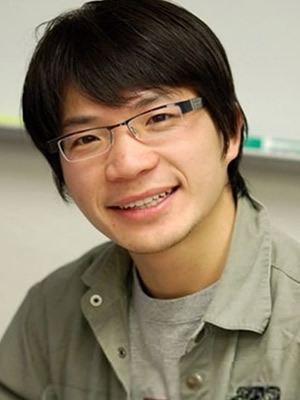
Xionglei He, Ph.D
-Distinguished Professor of the Chang Jiang Scholars Program, -Director of the Biomedical Research Center, Institute of Advanced Study Hong Kong
-Dean of the School of Life Sciences, Sun Yat-sen University
Tel: 020-84110775
Email: hexiongl@mail.sysu.edu.cn
Research field: Evolutionary Genetics and Genomics
Research Interests
Our laboratory integrates experimental and computational biology approaches to explore the following three key questions:
- The operation and evolution of gene complex systems: Using yeast cells as a model system to study how gene mutations affect gene expression networks and lead to phenotypic changes.
- Cell Lineage Tracing in Developmental Processes: We aim to address how a single fertilized egg develops into a multicellular individual with various organs. Using fruit flies, zebra fish, and mice as model organisms, we track somatic mutations during development to construct a complete cell lineage tree of a multicellular individual, thereby elucidating developmental relationships between different tissues, organs, or cell groups.
- Tumor evolution: Tumor occurrence, development, and metastasis are essentially mutation-driven cell evolution events. Therefore, this process can be better understood from the perspective of random evolution rather than directed development. Based on this concept, we analyze massive tumor omics data from public databases and combine specific clinical samples and mouse model studies to explore more effective strategies for tumor prevention and treatment.
Personal Experience
1994.9-1998.7, Bachelor's degree in Microbiology with a minor in Computer Science, Sun Yat-sen University
1998.9-2001.7, Master's degree in Biochemistry and Molecular Biology, Sun Yat-sen University
2004.1-2007.4, Doctoral degree in Evolutionary Genomics, University of Michigan - Ann Arbor
2007.7-Present, Professor at the School of Life Sciences, Sun Yat-sen University
2012.1-2016.12, Distinguished Professor of the Ministry of Education's Chang Jiang Scholar Program
Academic Achievements
Xionglei He, male, born in 1977 in Hunan , is a professor at the School of Life Sciences, Sun Yat-sen University. He received the National Science Fund for Distinguished Young Scholars in 2012. His research focuses on evolutionary genetics and genomics, and has made significant contributions to the functional divergence of duplicate genes and dosage compensation of sex chromosomes. His current research interests include gene network regulation, cell lineage development in multicellular organisms, and tumor evolution. His work has been published in top academic journals such as Science, PNAS, Nature Genetics, Nature Communications, Genome Research, and MBE. He has also been invited to write perspective articles for Science.
Research Projects
1. National Key R&D Program of China (2021YFA1302500): Systematic Evolutionary Rules of Gene Expression Networks in Mouse Cell Fate Determination, 2022/4-2027/3, PI.
2. National Natural Science Foundation of China Major Research Plan Integration Project (91731302): Research on Cellular Evolution Patterns and Mechanisms During Tumor Occurrence, Development, and Treatment, 2018/1-2019/12, PI.
3. National Natural Science Foundation of China Key Project (31630042): Evolutionary Study of Yeast Genotype-Phenotype Networks, 2017/1-2021/12, PI.
4. National 973 Program (2014CB542005): Animal Models for Studying Tumor Heterogeneity Evolution, 2014/1-2018/12, PI.
Publications
- Shanjun Deng, Ke Xing, Xionglei He\*. Mutation signatures inform the natural host of SARSCoV-2. National Science Review. 2022 February; 9(2).
- Kehui Liu, Shanjun Deng, Chang Ye, Zeqi Yao, Jianguo Wang, Han Gong, Li Liu*, and Xionglei He*. Mapping single-cell-resolution cell phylogeny reveals cell population dynamics during organ development. Nature Methods. 2021 December 2; 18, 1506–1514.
- Li Liu, Mengdi Liu, Di Zhang, Shanjun Deng, Piaopiao Chen, Jing Yang,Yunhan Xie and Xionglei He∗. Decoupling gene functions from knockout effects by evolutionary analyses. National Science Review. 2020 July; 7(7): 1169–1180.
- Li Liu, Yayu Wang, Di Zhang, Zhuoxin Chen, Xiaoshu Chen, Zhijian Su*, and Xionglei He*. The Origin of Additive Genetic Variance Driven by Positive Selection. Mol Biol Evol. 2020 August 29; 37(8):2300-2308.
- Han Chen, Chung-I Wu and Xionglei He*. The Genotype–Phenotype Relationships in the Light of Natural Selection. Mol Biol Evol. 2018 March 1; 35(3): 525-542.
- Piaopiao Chen, Dandan Wang, Han Chen, Zhenzhen Zhou, and Xionglei He*. The nonessentiality of essential genes in yeast provides therapeutic insights into a human disease. Genome Res. 2016 Oct; 26(10):1355-1362.
- Xionglei He*. The Biology Complicated by Genetic Analysis. Mol Biol Evol. 2016 June 13; 33(9): 2177–2181.
- Xionglei He*, Li Liu*. Toward a prospective molecular evolution. Science. 2016 May 13;352(6287):769-70.
- Han Chen, Xionglei He\*. The Convergent Cancer Evolution toward a Single Cellular Destination. Mol Biol Evol. 2016 Jan;33(1):4-12.
- Han Chen, Fangqin Lin, Ke Xing, and Xionglei He*. The reverse evolution from multicellularity to unicellularity during carcinogenesis. Nat Commun. 2015 Mar 9; 6:6367.
- Han Chen, Ke Xing\*, Xionglei He. The dJ/dS ratio test reveals hundreds of novel putative cancer drivers. Mol Biol Evol. 2015 Aug; 32(8):2181-5.
- Ke Xing\* and Xionglei He. Reassessing the “duon” hypothesis of protein evolution. Mol Biol Evol. 2015 Apr; 32(4):1056-6.
- Fangqin Lin, Ke Xing, Jiangzhi Zhang, and Xionglei He*. Expression reduction in mammalian X chromosome evolution refutes Ohno's hypothesis of dosage compensation. PNAS. 2012 Jul 17; 109(29):11752-7.
- Xiaoshu Chen, Zhidong Chen, Han Chen, Zhijian Su, Jianfeng Yang, Fangqin Lin, Suhua Shi, and Xionglei He*. Nucleosomes suppress spontaneous mutations base-specifically in eukaryotes. Science. 2012 March 9; 335:1235-1238.
- Yuanyan Xiong, Xiaoshu Chen, Zhidong Chen, Xunzhang Wang, Suhua Shi, Xueqin Wang, Jianzhi Zhang*, and Xionglei He*. RNA sequencing shows no dosage compensation of the active X-chromosome. Nature Genetics. 2010 Dec; 42(12):1043-1047.