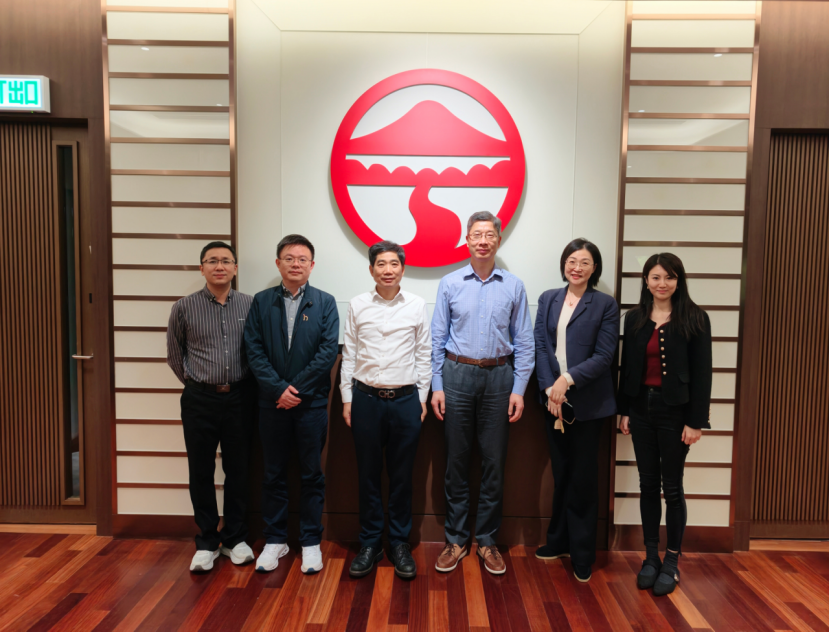
Sun Yat-sen University Institute of Advanced Studies Hong Kong and Lingnan University Hold Cooperation Meeting to Explore New Pathways for Integrated Development of AI and Life and Health Sciences
On the afternoon of December 9, 2025, Professor Xu Anlong, Dean of Sun Yat-sen University Institute of Advanced Studies Hong Kong (hereinafter referred to as “IASHK”), led a delegation to visit Lingnan University in Tuen Mun, Hong Kong, following Lingnan University’s visit to Sun Yat-sen University in Guangzhou on November 25. Dean Xu held in-depth discussions with Vice President Yao Xin of Lingnan University on interdisciplinary research collaboration. The two sides reached consensuses on cooperation prospects, specific directions, and implementation pathways in the fields of artificial intelligence and life and health sciences.
At present, the deep integration of AI technologies with life and biomedical sciences has become a major global trend in scientific innovation, bringing revolutionary breakthroughs to areas such as disease diagnosis and drug development. This return visit represents an important step in implementing the intentions reached at the 9th Annual Meeting of the Sun Yat-sen University–Lingnan University Cooperative Development Committee on November 25. The visit aimed to build an interdisciplinary “AI + Life and Health Sciences” cooperation framework by leveraging IASHK’s accumulated research strengths in life sciences (particularly antibody drug development) and Lingnan University’s technological advantages in artificial intelligence, thereby achieving complementary integration of research resources.
During the meeting, Dean Xu Anlong provided a detailed overview of IASHK’s development progress, with a focus on the Institute’s phased achievements and future plans in antibody drug development. He noted that while IASHK concentrates on basic research in life sciences and practical drug development, Lingnan University excels in artificial intelligence algorithm innovation and technological applications. The two sides can fully leverage their respective disciplinary strengths to carry out end-to-end collaboration in areas such as AI-assisted prediction of conserved antigen epitopes in pathogens, construction of combinatorial antibody libraries, and AI-based virtual screening of antibodies. He also shared preliminary ideas regarding cooperation frameworks, division of responsibilities, and resource investment.
Vice President Yao Xin expressed strong interest in IASHK’s antibody drug development program and engaged in detailed discussions on the core roles AI technologies could play in the projects, with particular attention to key issues including algorithm model optimization, intellectual property protection, and commercialization strategies. He stated that Lingnan University’s AI research teams have accumulated extensive experience in cross-disciplinary collaboration and expressed strong confidence in the potential and value of the partnership, affirming that Lingnan University would actively promote the implementation of joint initiatives.
The meeting also explored specific plans for project collaboration and resource integration, including potential partnerships with domestic and international universities, research institutions, and enterprises. Discussions covered the formation of interdisciplinary research teams integrating expertise from artificial intelligence, biology, and medicine, as well as clarification of next steps, including drafting detailed project proposals, defining timelines and responsibilities, and preparing project application materials to ensure efficient advancement and successful implementation.
This cooperation meeting established a stable bridge for scientific collaboration between the two sides. Looking ahead, through the deep integration of AI technologies with life and health sciences, the partnership is expected to accelerate antibody drug development and provide more efficient solutions for the treatment of related diseases, while also serving as a model for interdisciplinary scientific innovation in Hong Kong and the Greater Bay Area.